Presented by Crawler Supply Company
It’s a Tuesday morning in October. Your crew is on site by 6:30. The excavator was running fine yesterday. Today it won’t start. Hydraulic issue. Could be a line, could be a pump, could be something electrical. Nobody knows yet because nobody can get under the hood and diagnose it on the spot.
So now what?
Your operator is standing next to a dead machine. The rest of the crew that depends on that excavator is standing around waiting. The concrete pour scheduled for Thursday needs the trench finished by tomorrow. And the clock is running on every single one of those people whether the machine is working or not.
This is the moment most contractors don’t think about until it happens. And it happens more often than anyone wants to admit.
It’s not the repair that kills you
The repair bill is the number everyone focuses on. A hydraulic pump replacement might cost a few thousand dollars. That hurts, but it’s a fixed cost you can plan around.
The real damage is everything else.
A crew sitting idle on a job site costs money every hour. If your machine bills at $150 an hour and the crew it supports runs another $350 an hour in labor, a single eight-hour day of downtime costs roughly $4,000 in lost production. That’s before anyone even touches the repair.
Then you start making phone calls. You need a rental to keep the job moving. Daily rates on excavators, dozers, and loaders can run anywhere from $500 to $2,000 depending on the machine. If the part you need isn’t in stock locally and has to be ordered, you might be renting for a week or more. And rush-ordering a part can cost 30 to 40 percent more than sourcing it through normal channels.
Now your Thursday concrete pour is in jeopardy. Your sub wants to know if the schedule is holding. Your GC is asking questions. One machine failure on one job site starts creating pressure on every other commitment you’ve made that week.
The ripple effect nobody talks about
Here’s the part that really costs contractors money. When a critical machine goes down on one job, the easiest fix is to pull a machine off another job to cover it. Now you’ve got two projects disrupted instead of one. The second site’s crew is short a machine for a day or two, which pushes their timeline back, which triggers overtime to catch up.
One breakdown. Two job sites affected. And by the end of the week you’ve burned through margin on both of them.
Equipment that breaks down frequently also loses resale value. A loader with clean maintenance records and 6,000 hours trades for significantly more than the same model with irregular service history and a couple of major breakdowns in its file. Poor maintenance doesn’t just cost you during operation. It costs you again when it’s time to trade up.
The difference is who you call
When a machine goes down, the outcome depends almost entirely on how fast you can get a diagnosis, a part, and a tech on site.
If your dealer is a national chain with a call center in another state, you’re waiting in a queue. If the part has to ship from a warehouse across the country, you’re waiting on freight. If the closest service tech is booked for three days, you’re still down.
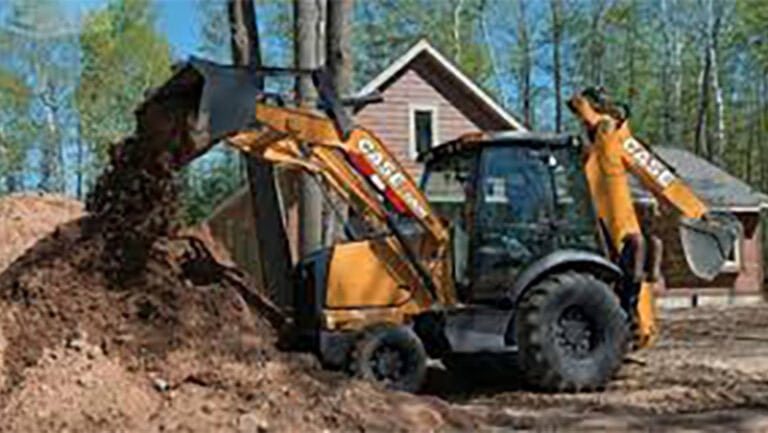
If your dealer is Crawler Supply Company on Airline Highway in Baton Rouge, it’s a different conversation. Vice President Daniel Cloy and his team keep service trucks ready to dispatch to your job site. Their parts and service department stocks a deep inventory of CASE Construction Equipment parts so common repairs don’t turn into week-long waits. Their technicians are certified and experienced enough to diagnose problems in the field, get you a fix, and get your crew back to work the same day whenever possible.
If you need a rental machine to keep the job running while yours is being repaired, they’ve got that too. If you need a specific part, you can submit a request through their website and get it sourced without playing phone tag.
Fall is the wrong time to find out your dealer can’t keep up
October through December is when contractors across the Capital Region are pushing hardest to close out projects before the end of the year. Schedules are tight. Margins are thinner. Every day of downtime hits harder right now than it does in February.
If you don’t already have a dealer relationship that includes preventive maintenance, fast parts access, and service trucks that come to you, this is the time to build one. Daniel and his team at Crawler Supply have been keeping Louisiana contractors running since 1971. They know what’s at stake when a machine goes down because they’ve been on the other end of that phone call thousands of times.
Call (225) 357-7515 or stop by the shop on Airline Highway. Don’t wait until you’re standing next to a dead machine to find out who your dealer really is.
To browse new, used, and rental equipment, or to reach the parts and service team, visit crawlersupply.com.
This is sponsored content presented by Crawler Supply Company. Located at 6413 Airline Hwy, Baton Rouge, LA 70805. Open Monday through Friday, 7:00 AM to 4:30 PM. Phone: (225) 357-7515. Toll-free: (888) 772-9505. Visit crawlersupply.com for equipment availability and to contact their team.