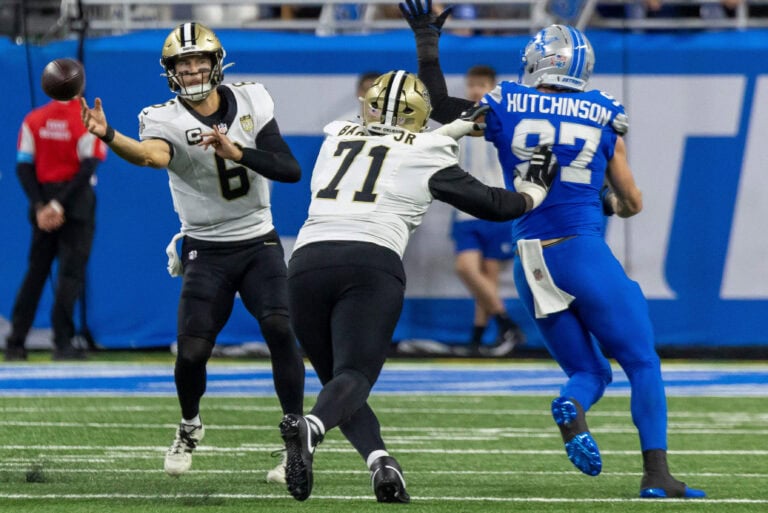
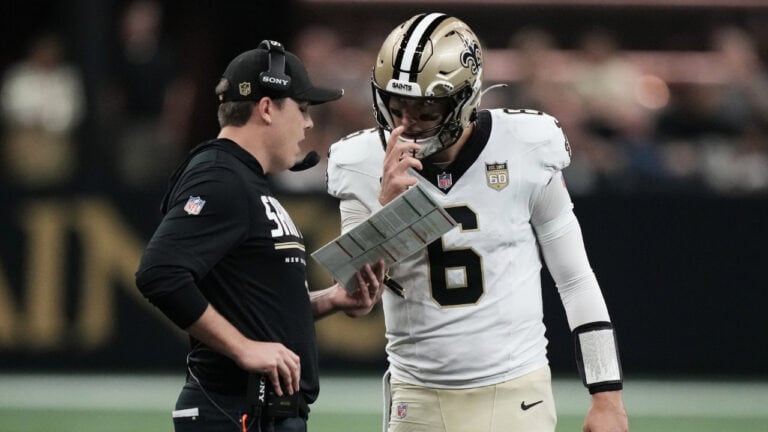
Monday night’s loss to the Atlanta Falcons was a tough pill to swallow for the New Orleans Saints, but it’s one the team will have to learn from. One of the lessons that can be taken will be handling pressure and keeping its surging quarterback, Tyler Shough, upright.
During the loss, Shough was pressured on a career high 49% of his snaps. Next, he’ll stand opposite a Minnesota Vikings defense on Sunday that blitzes more than 67% of the time, the highest rate in the NFL through four weeks, and that carries the second-highest pressure rate in the NFL.
The Vikings rank behind only the Falcons in pressure rate.
The Saints (1-2) were fortunate against Atlanta that Shough was able to complete 13 of 22 passes for 146 yards and throw a touchdown pass when pressured. But the offense is going to have to do a better job keeping the heat off of him as best it can against the Vikings.
It’s a bonus for a club with a quarterback able to produce under pressure, but the team must be able to put him in position to do so as little as possible.
The Falcons were able to generate a lot of pressure while blitzing in less than a quarter of their snaps. The Vikings go about it in an entirely different way. Minnesota defensive coordinator Brian Flores sends five or more rushers almost as a base defense, dropping six into coverage.
These are not your standard zone blitzes where an area of the field doesn’t get covered in exchange for an additional pressure player. Flores designs his coverages and blitzes to force a quarterback to do much more than find where the player is rushing from and throwing a route in that vacated area.
Shough’s high-pressure experience from last week should benefit him going into the Week 5 contest. But the Saints will have to have their protection unit ready so that the quarterback can go through his normal progression to find the natural creases in the zone coverages Flores calls, rather than being able to rely on replacement routes in the area of the blitzers.
It’s going to be a complex game plan to topple the Vikings’ No. 1 scoring defense, one that begins with applying the lessons learned against the Falcons last week.