
December 27, 2025: NCAA football, Kinder’s Texas Bowl game action between the Houston Cougars and the LSU Tigers at NRG Stadium in Houston, TX. Michael Bacigalupi
(The quotes in this story come from LSU Athletic director Verge Ausberry’s conversation with Matt Moscona on After Further Review on Tuesday. Watch the interview here.)
By Hunt Palmer
Cash is king in college athletics.
Revenue rules the day, and donations help facilitate competitiveness. That’s true of NIL deals, coaching buyouts, facility improvements and other aspects of the college sports landscape. It’s always been true to a degree, but it’s never been more important.
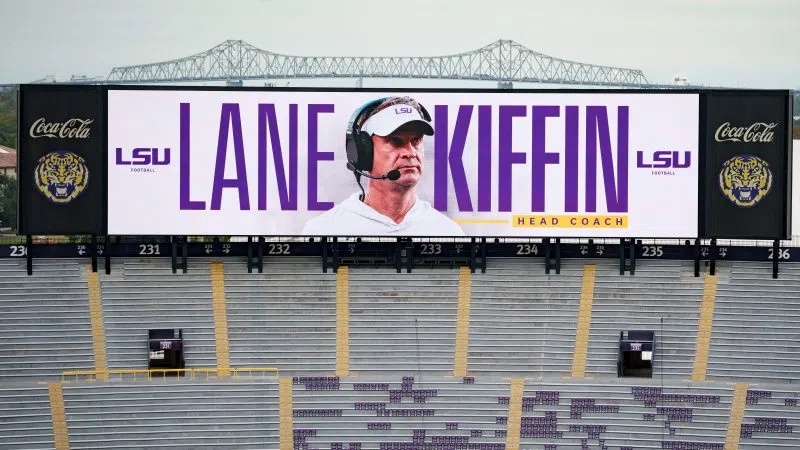
Verge Ausberry was named LSU’s athletic director at the end of October and has worked in LSU’s athletic department for the better part of 30 years. On Monday, the school announced its partnership with Woodside Energy to place patches on all 21 varsity athletic uniforms. It’s the first announcement of its kind nationally. LSU was also the first school Nike partnered with to launch its Blue Ribbon Elite NIL program.
“The new (athletic director) is totally different from three to five years ago,” Ausberry said. “It’s all about revenue generating, and all the ADs around the country and the administrators around the country are looking for new ways to generate revenue. We were advanced in the way we did the Nike contract. We’re advanced here. We’ve been working with Woodside Energy…for a period of time in getting this done. We didn’t wait until (the NCAA) said you could do it. We were very aggressive.”
Major athletic departments began sharing their revenue with athletes to the tune of just over $20 million dollars in 2025-26. To operate the same way with that added expense means significant new revenue streams are vital. Ausberry, like every major athletic director in the country, has to facilitate the allocation of those dollars between fiercely competitive programs on his own campus.
With everyone fighting for dollars, is it possible to be good at everything?
“We have 18 sports ranked in the top 25 in our athletic department,” Ausberry said. “That’s a conversation that we have amongst ourselves. We’re going to try to win in every sport, but I have to admit to you that it’s going to very expensive to do that.”
Football generated roughly $177 million in revenue a season ago. That resulted in a surplus of $66.8 million. Men’s basketball, thanks almost solely to the media rights agreement with the NCAA Tournament, generated more than $11 million which netted LSU about $2.5 million. The rest of the department operated in the red to various degrees, and that includes championship-level programs like baseball (-$921,000) and women’s basketball (-$7.9 million).
They all want to win, and they all need money to do it.
“Days are changing,” Ausberry said. “So, we have to sit down as a staff and analyze what’s important to us and where we can win. Places where we don’t think we can win or can’t be successful, you might make changes there. Overall, we’re going to try to do what we can do in this new age, new climate.”
Men’s basketball is the No. 2 money generator in college athletics. LSU’s program has been down from a wins and losses standpoint for four seasons under head coach Matt McMahon. After Tuesday’s loss at Texas, LSU has slipped to 2-11 in SEC play. McMahon’s four-year conference record is 16-51.
The Maravich Center crowds have dwindled since league play began.
“We’re going to assess (the program) at the end of the year,” Ausberry said. “Dr. (Wade) Rousse, the chairman of the Board (Lee Mallet), all of us are going to get together, and we’re going to look at it as a whole and just try to figure out where we are in basketball. We’ve got to be financially responsible to the institution of LSU also in making these decisions. It’s not going to be moving coaches around and firing coaches to fire a coach. We’re going to think about it in an intelligent way and try to make sure this is the right thing to do at this time.”
LSU has a proud men’s basketball tradition dating back to Pete Maravich’s days in the 1960 and a pair of Final Four runs in the 80s under Dale Brown.
However, currently the program has fallen well behind the standard set on campus by national championship level programs like baseball, gymnastics and women’s basketball.
Those sports, even operating at an elite level, can’t produce streams of cash like men’s basketball can because of the current media rights contracts.
“I feel that LSU basketball should be a winner,” Ausberry said. “It’s our second money raiser here at LSU, and LSU basketball should be in the NCAA Tournament. That’s just the way I feel personally about what we do here in basketball…We need to be competitive in that sport.”


More Top Stories