
Jay Biggerstaff-Imagn Images
By Hunt Palmer
On the same night Darius Acuff dropped 49 points in Tuscaloosa and never came off the floor in a double overtime game, Darryn Peterson basically matched him almost shot for shot before halftime in Stillwater.
Peterson played three second half minutes.
Both Acuff and Peterson are projected top five picks in this loaded NBA Draft, and both have been sensational when on the court. Acuff may become the first player ever to lead the SEC in scoring and assists in conference games. Peterson is scoring 20 per game while shooting 43 percent from the three-point line.
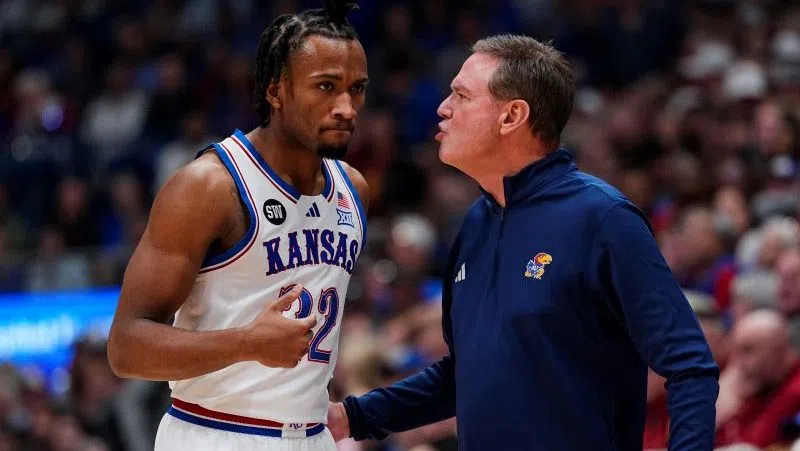
After Wednesday’s game, Kansas head coach Bill Self didn’t allude to an injury or any discipline that held Peterson out of the second half. This season-long circus has included cramps, the flu, a hamstring “issue” and extremely limited minutes for college basketball’s best player.
Self appears out of answers for his star who has played in 15 games and missed 11.
“I wasn’t expecting that tonight at all,” Self said postgame. “I thought he was good to go. We only got 18 minutes out of him. That’s disappointing, because he could have had a really big night.”
Herein lies the largest disconnect between players and fans in professional sports, and that’s what these major universities are playing. Fans only care about winning. They do not care how much money the players make. Some players largely care about winning with money coming in an important second. And some players only care about money with winning being an added convenience.
Little evidence suggests Peterson cares about winning at Kansas. His check will clear at the Lawrence-area bank, but the bigger one waiting from an NBA front office is the prize, not a piece of net from Indianapolis in a month’s time.
That’s Peterson’s right as a supremely gifted athlete. It’s also a fan’s right to be disappointed by it.
At LSU, various programs around campus carry relatively the same reputation as Kansas basketball. The school has produced five No. 1 overall picks—JaMarcus Russell, Joe Burrow, Ben Simmons, Paul Skenes and Seimone Augustus—over four programs in 20 years. Dylan Crews, Jayden Daniels and Sylvia Fowles went second overall.
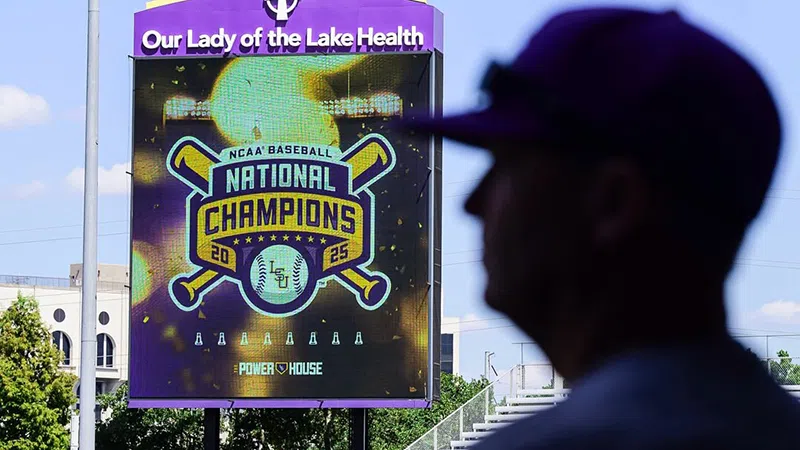
National championships are celebrated multiple times per decade. In this recent run, they’ve come annually.
Five-star recruits and high-dollar transfers flock to LSU every single year. Angel Reese, Tommy White and Sam Leavitt made money to varying degrees in Baton Rouge.
Reese played as hard as any player in the country and helped win it all. White played through a season-long shoulder injury to win a title. Leavitt is grinding in the offseason despite a Lisfranc injury that will keep him out of practice for months.
Players like those and Acuff are far more prevalent. Most put on the jersey and want to compete. They want to win. The exceptions will always exist, though. What started with some bowl opt outs could trickle down to regular season “load management” like we’re seeing in Kansas.
The difference between Leonard Fournette and Christian McCaffrey sitting a game out and this situation is that those two couldn’t legally make money. On3 projects Peterson’s NIL valuation at $1.5 million. Considering Kentucky, who paid north of $20 million for its roster, North Carolina, Michigan, Michigan State and Arkansas were involved here, I’m going to guess $1.5 is low. By a lot.
What motivates boosters to shell out cash if a player is going to collect it while using a Theragun on the bench as often as he actually plays?
Peterson’s story will be a cautionary one for athletic programs around the country who are now putting players under contract. Expect to see incentives being introduced for games/minutes played, production-based bonuses and other types of stipulations you see in the professional ranks all the time.
Could that lead to players aiming for incentives over wins and losses? Sure, but they’ll be on the court or field.
How the NCAA Tournament plays out with Peterson will ultimately tell his story, but his impact on the college game is going to be measurable.
Winning championships without stars is an impossibility. Jay Johnson has said it repeatedly. More than ever, it’s important to make sure those stars are motivated by the right things to get that done.
That hasn’t been a problem in Baton Rouge.


More Top Stories