LSU’s backbone will always be the state of Louisiana.
Plenty of the elite players in the program’s history, including two of the three Heisman winners, have hailed from out of state. In the transfer portal era, that number will steadily rise. However, the geographical advantage LSU has being the only power conference school in a talent rich state is one of the main reasons LSU has reached the pinnacle of college football over the last 25 years.
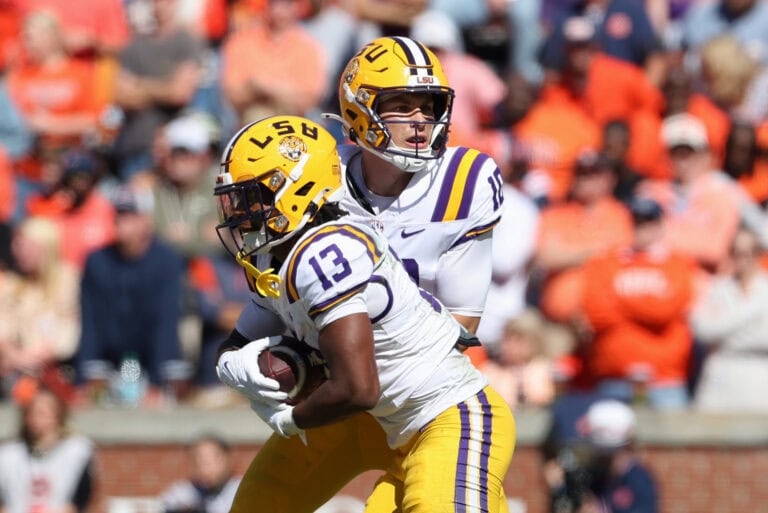
No position has embodied that better than running back.
LSU’s ascendence to national relevance began with Justin Vincent, Alley Broussard and Shyrone Carey running the football. The next title team featured Jacob Hester, Keiland Williams, Charles Scott and Trindon Holliday. Then came the 2011 group that included Kenny Hilliard, Michael Ford and Alfred Blue.
That ushered in an age of NFL talent with Jeremy Hill, Leonard Fournette and Derrius Guice. Darrel Williams would also go on to play five NFL years. Next were Nick Brossette and eventual first rounder Clyde Edwards-Helaire. John Emery and Ty Davis-Price had their moments.
That’s 18 backs, and every one of them call Louisiana home. From 2003 to 2022, 20 seasons, a Louisiana native led LSU in rushing 17 times.
Sure, Joseph Addai, Stevan Ridley, Spencer Ware and others have come from out of state to tote the rock for the Tigers. All three of those players went on to NFL careers after excellent seasons at LSU. But the running backs have almost always come from The Boot.
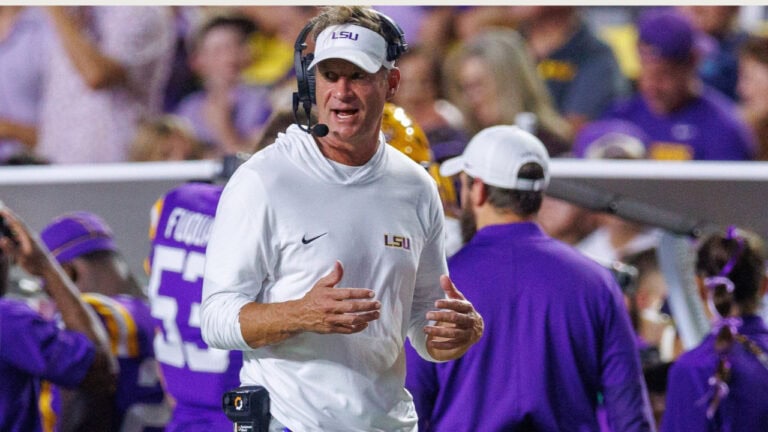
That’s why I’ve been interested in LSU’s first tailback commitment of the Lane Kiffin/Kevin Smith era and what is likely to be the second.
Brennan Lacey (Frisco, TX) pledged to the Tigers over the weekend, and many believe Tre Segarra (Duncan, SC) will be next. Segarra is considered a top 10 back by Rivals and 247. He is already 5-foot-10 and 210 pounds and holds offers from South Carolina, Clemson, Tennessee and Florida among others. Miami, Texas Tech and Notre Dame, all playoff teams from the last two seasons, are on Lacey.
Both appear to be great players. Kevin Smith just appears to be casting a wider net than Frank Wilson. That’s also not to suggest LSU is neglecting Louisiana. LSU remains firmly in contention for Franklin Parish running back Trey Martin, though Alabama and Ole Miss, where Kevin Wilson coaches the position, are also in the mix.
Smith’s track record for identifying and developing backs at Ole Miss is stellar. Quinshon Judkins and Kewan Lacey weren’t on many radars before exploding for massive seasons in Kiffin’s offense. With that kind of recent resume’, Smith deserves the autonomy to recruit and develop whoever he sees fit.
That said, it’s certainly a change of pace from a formula that has worked will for LSU for a very long time. Brian Kelly’s teams were never led in rushing by a Louisiana product. Jayden Daniels edged Logan Diggs, a Rummel Raider, in 2023.
I’d never suggest where a person’s high school is built will determine how many yards he can run for. That would be absurd. And Louisiana has had its share of recent backs fail to produce at LSU. Trey Holly and JT Lindsey were entangled in legal situations. Kaleb Jackson couldn’t get to the field.
Smith’s first signing class isn’t complete, and his first room hasn’t taken shape yet.
Harlem Berry could shift this narrative come fall. Or perhaps the change in narrative just came with the portal.
However you slice it, the running game must produce far better than it has the last four seasons. Kiffin and Smith are in charge of that no matter where the backs come from.