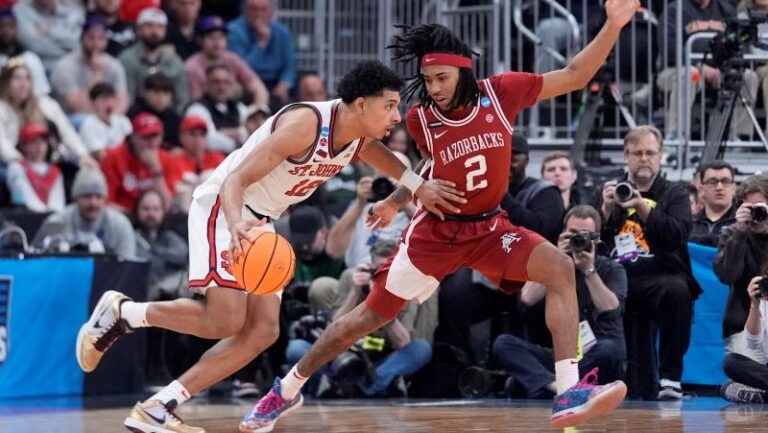
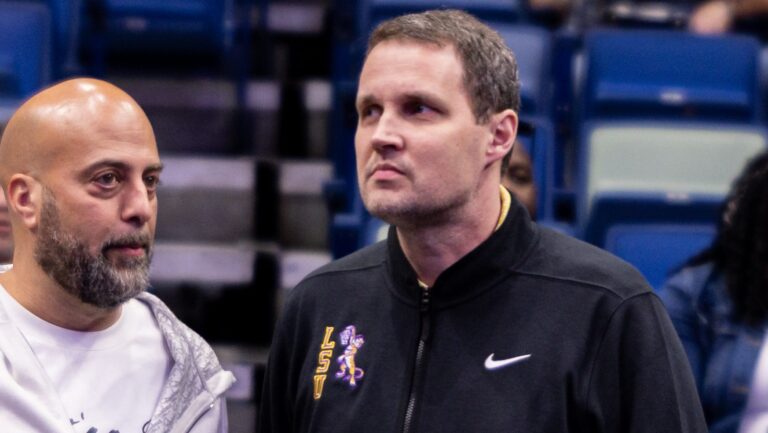
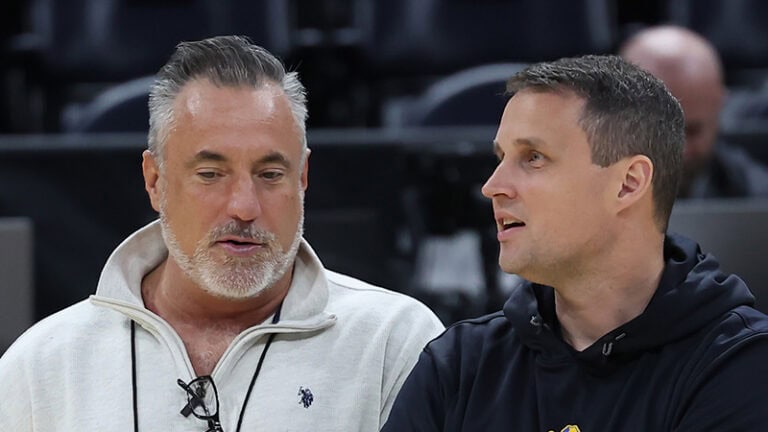
Baton Rouge attorney Tony Clayton said Wednesday that a local judge in state district court signed an injunction that enjoined LSU, the school’s basketball coach Will Wade and the Southeastern Conference from doing anything to stop his client, RJ Luis, from playing for the Tigers this season.
“This time, unfortunately, I had to sue LSU and indirectly coach Wade,” Clayton said in an interview with host Matt Moscona of After Further Review. “They (LSU) were not going to go against the SEC even though we had the law on our side. We had to sue LSU to force them to play.”
Luis, who signed contracts in 2025 but never played for either the Boston Celtics or Utah Jazz, was granted a temporary restraining order in an East Baton Rouge Parish courtroom in late August, but was never added to the team.
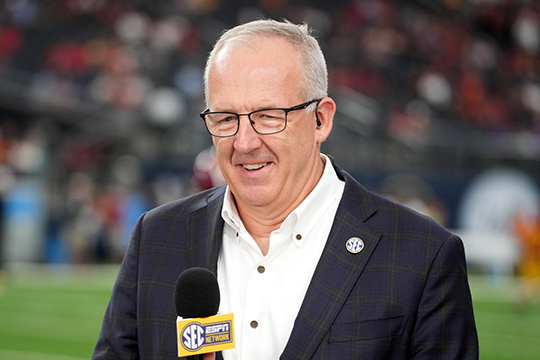
Clayton felt his client was never rostered after the SEC and commissioner Greg Sankey said that the league had a time-honored rule that didn’t permit its member schools from adding players with professional experience to their rosters.
The SEC, in September, further added some bite to its policy with updated provisions to that rule that if teams that such players in question, to have its head coach suspended, the university be fined up to half of its sports budget and withhold a member institution from voting privileges on conference matters.
According to the school’s athletics website, LSU has 14 players on its rosters or one below the NCAA maximum.
Clayton said this latest move allows Luis to practice and play until Nov. 13.
“We’re going to move to have the temporary injunction moved to a preliminary one and hopefully a permanent one,” Clayton said. “It’s great for RJ. Talked to him. He’s ready to go practice and play and get on with his life.”
Clayton explained the near two-month delay from the time Luis was granted a TRO in August to Wednesday’s developments.
“We thought LSU would capitulate, coach Will Wade would play the kid, but they didn’t,” he said. “We waited and nothing’s happened. RJ reluctantly said, ‘You’ve got to do something. I want to play.’ We filed this and brought LSU into the fold.
“I think Sankey thought that LSU was controlling everything and how wrong he was,” he said. “It’s RJ fighting for his constitutional right to play and that’s what it’s all about.”
LSU opens its season on Nov. 3 at home against LSU-New Orleans at 7 p.m.
Clayton believed that if not for Sankey, LSU would have complied following the preliminary injunction and rostered Luis, a former Big East Conference Player of the Year at St. John’s. He had one year of eligibility remaining when he declared for the NBA.
“Sankey was threatening them,” he said of LSU. “You have to use the long arm of the law to keep Sankey in check. He’s like a little dictator and hopefully he’ll follow the rules this time. I don’t expect him to, and we’ll see him in court.”
A total of 91 players, Clayton said, are currently on NCAA rosters throughout the country and are the products of foreign professional leagues.
“You have a kid that’s not played one second of pro ball,” he said of Luis. “He did go to the G-League and played a couple of minutes.”
Clayton was on hand when judge Ronald Johnson granted a preliminary injunction to football players Dae’Quan Wright and Zxavian Harris and fully expected them to be on LSU’s roster. Both players had spent time on NFL rosters during the preseason but were released.
Clayton said he’s in the infancy stages of preparing a damage suit in civil court, one that could be heard in Baton Rouge, against the SEC on behalf of Wright and Harris, who both played for Lane Kiffin at Ole Miss.
“I think it’s going to be a big damage suit,” he said. “You’ve ruined these kids. You’ve put a Scarlet Letter around their necks. They’ll just be tarnished for the rest of their lives after the whole deal was over with. It just sucked the life out of these kids and stopped their ability to play ball. You can’t make it make sense. I just don’t understand the (Sankey) guy.”