With LSU football retiring the jersey No. 7 of Bert Jones on November 14, 2026, LouisianaSports.net is publishing a series about Jones called 7-on-7 … one story each day for seven days leading up to the jersey retirement ceremony.
The series is written by Pulitzer Prize winner Jeffrey Marx, author of six books including Walking with Tigers: A Collection of LSU Sports Stories.
Anyone who ever saw Bert Jones throw a football knew that something was different.
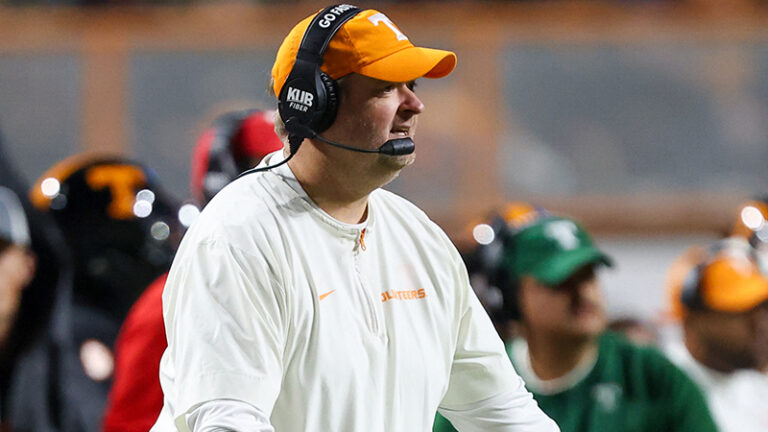
Bill Belichick saw Bert throw a lot of footballs. The most successful coach in NFL history – winner of six Super Bowls as leader of the New England Patriots and two as defensive coordinator of the New York Giants – spent his first NFL season as an assistant with the 1975 Baltimore Colts. Bert was their rising star at quarterback … a year away from being named MVP of the entire league. And young Belichick felt fortunate just to be around him.
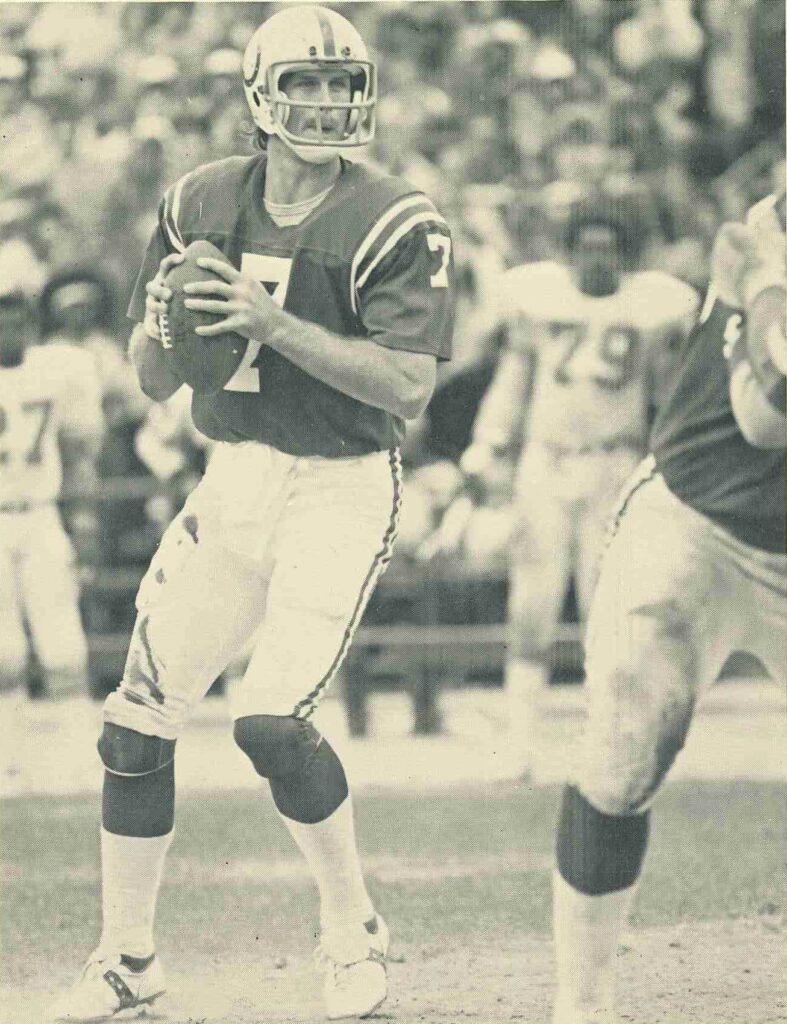
Belichick watched a lot of great quarterbacks – playing both for him and against him – in the decades that followed. But Bert always remained his gold standard. Belichick was unequivocal in something he said a few years ago to NFL Films: “In my career, I can’t think of another quarterback that I would say had a better arm than Bert or was a better athlete … had a better total package.”
Considering the source, it is hard to imagine a more glowing compliment. The only thing missing was mention of a remarkable contribution Bert routinely made to the soundtrack of a game. It was the sound of a football whistling in the air.
*******************************
As an LSU offensive lineman in the early 1970s – ultimately an All-American guard – Tyler LaFauci always knew that job one was protecting his quarterback. And especially when that quarterback was someone as valuable to the team as Bert Jones. That’s why LaFauci has never forgotten the beautiful sound of a football whistling.
That is not normal behavior for a football. It does not usually whistle. But Bert’s powerful right arm and large right hand were not normal. They unleashed footballs with such velocity and spin that some of them would actually whistle.
LaFauci had never heard that with any other quarterback.
“I would hear the ball over my head when it passed me,” LaFauci says. “It was like you would hear a plane going by, that whoosh sound, but this was a whistle. I mean, it was right over my head, and I knew the ball was there because I heard it.”
That whistle was music tickling the eardrums of a hard-working offensive lineman.
“I loved that sound because it meant that the ball was gone,” LaFauci says. “It indicated that we had been successful in protecting Bert. We had done our job.”
LaFauci still smiles at the thought of that.
*******************************
In the beginning, it was not throwing footballs that made Bert stand out. It was throwing pretty much anything he could get his hands on. This started when he was just a young kid, playing outside in his hometown of Ruston, Louisiana. His father was first to notice.
William A. “Dub” Jones would proudly declare Bert “the best dang rock thrower” in Lincoln Parish. And Dub knew a thing or two about throwing. He spent several years coaching quarterbacks for the Cleveland Browns. That was after his own playing career as an All-Pro flanker with the dominant Browns of the late-1940s and 1950s – a stretch of eight years that included three NFL championships.
Bert progressed from throwing rocks to throwing baseballs. Dub lost count of the no-hitters his son pitched in youth baseball. Bert never worried about keeping track. He was just having fun.
His senior year in high school – already known as one of the best quarterbacks in Louisiana – Bert decided to throw the javelin for the Ruston High School track-and-field team. He proceeded to win the 1969 state title with a throw of more than 205 feet.
But his nickname came from football. More precisely: It came from local newspaper reporter O.K. “Buddy” Davis of the Ruston Daily Leader. Watching Bert display an arsenal of high-caliber passes for Ruston High, Davis tagged him The Ruston Rifle.
The name was perfect both in its description of Bert’s arm and its double meaning: gunslinger on a football field and dedicated deer hunter away from it.
The nickname stuck. It went with Bert to LSU. It stayed with him in the NFL. People still use it.
A friendship between Bert and the man who named him The Ruston Rifle also stuck through the years. In 2019, when Davis died at 72, Bert was one of the pallbearers.
*******************************
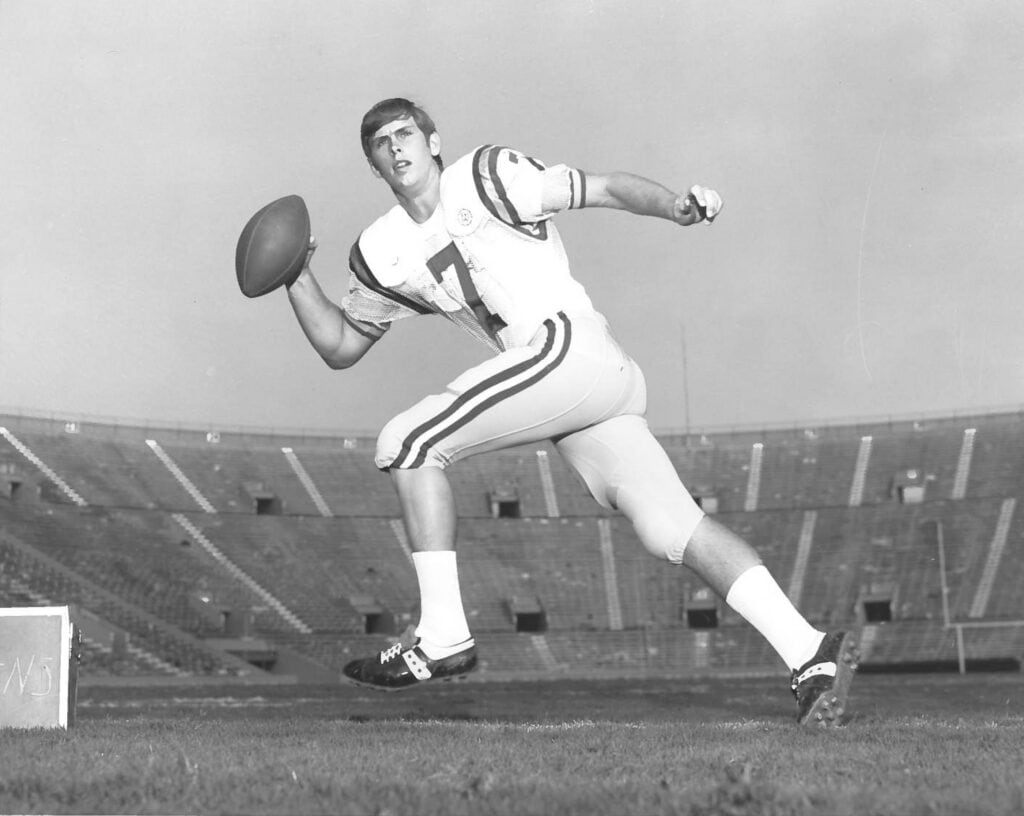
Soon after Bert arrived at LSU, head coach Charles McClendon started telling people he had the strongest arm of any quarterback to play for the Tigers since Y.A. Tittle (who finished college in 1947 and was ultimately inducted into the Pro Football Hall of Fame).
McClendon nonetheless stayed with his standard two-quarterback system and favored an “old school” conventional approach to offense (far more running than passing). As talented as Bert was – consensus All-American his senior year – he always shared the LSU quarterback position (first with Buddy Lee and then with Paul Lyons).
None of that stopped anyone from noticing that Bert could fire footballs like nobody they’d ever seen.
“He could leave a mark on you wherever the ball hit you,” says former teammate Al Coffee, a speedster at split back who doubled as an All-American on the LSU track team. “Sometimes you didn’t know whether to catch the ball or get out of the way. And the laces on the ball – they would tear up your hands. But you couldn’t blame the guy. He’d been throwing hard like that his whole life.”
Another former teammate, split end Jimmy LeDoux, says his hands still offer reminders of how hard Bert threw: “I have knuckles that are jammed to this day from catching his passes.”
Former All-American linebacker George Bevan has no such bodily evidence documenting his encounters with The Ruston Rifle. But he has a favorite story that he and Bert still laugh about whenever they see each other.
It happened in practice the first week of November 1969. LSU was getting ready to play Alabama in Tiger Stadium. Bevan was a senior. Bert was only a freshman – meaning he couldn’t yet play in actual games but sometimes served as quarterback of the “scout team” helping to prepare the varsity defense. In this case, Bert’s job was to mimic the role of Alabama quarterback Scott Hunter.
The story starts with Bert dropping back to pass. He was looking for a receiver across the middle. Bevan was doing his best to cover the area but somehow didn’t see the ball coming. The first he knew of its presence was when it smacked right into his facemask and helmet … and with such force that it just stuck in there … the point of the ball lodged between the mask and front of the helmet.
Nobody there had ever seen that happen.
“Back then, the facemask was not a real big one … didn’t cover as much of the face as it does nowadays,” Bevan says. “But I couldn’t believe it. I was stunned. I looked up, saw Bert, and I gave him a good glare.”
It’s funny to Bert now. But it wasn’t at the time.
“I thought George was going to kill me,” Bert says. “I was just a young kid – we were just practicing – and I hit the best player on the defense straight in the face. I mean, George wasn’t big, but he hit harder than anybody I’ve ever seen. That was as scared as I’ve ever been on a football field.”
Bevan did nothing beyond glaring. He pulled out the ball. Tossed it away. And practice resumed as if nothing unusual had happened.
*******************************
At 6-foot-3 and weighing about 210 pounds through his early NFL days, Bert had a made-for-the-job frame and was only getting stronger. When Sports Illustrated writer Robert F. Jones declared that the young star of the Baltimore Colts seemed to have it all – detailing a generous array of physical and mental attributes and even noting the quarterback’s “sparkling, joy-to-be-with” personality – he began with the obvious: “A strong right arm that can whip the ball out of sight in a flat trajectory.”
Dub Jones had long before passed down his theory about throwing and Bert agreed with it. One: It has to be done with a natural motion – and a natural motion can’t really be coached into someone. Two: Throw hard!
That went for both baseball and football – which might explain why Bert’s over-the-top throwing motion in football was often compared to the classic style of a baseball pitcher.
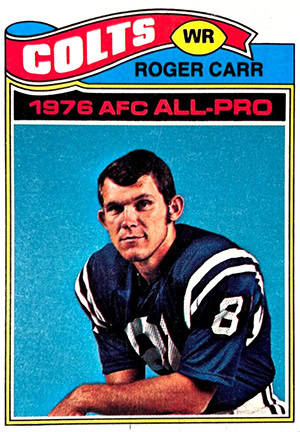
Pro Bowl wide receiver Roger Carr – Bert’s best receiver with the Colts – remembers being with him at a football camp for kids and hearing what he told aspiring quarterbacks about throwing a football: “Just grip it and throw it like a baseball.”
“He didn’t get technical,” Carr says. “He kept it real simple. ‘Just grip it and rip it. You either got it or you don’t.’ Bert had it. I mean, when Bert threw that thing, it was smoking out of there. Nobody could throw a football better than Bert Jones. Nobody.”
*******************************
The stories are endless.
The tributes are resounding.
The nickname alone speaks with authority.
Clearly, The Ruston Rifle had a serious arm.
But throw a football from one end of the field to the other? Fully 100 yards in the air? Are we really supposed to believe Bert did that?
This is worthy of discussion only because – true or not – it’s been at least mythologized since the 1970s. So: Bunyanesque hyperbole? Or hard-to-believe reality?
Bert says he did it. Push him as much as you want on this. He will not budge.
But discuss it with all sorts of folks in the football world – people who know Bert and people who don’t – and you’ll get mostly the same response: No way! Just not humanly possible.
Former Ole Miss and New Orleans Saints star quarterback Archie Manning, father of Super Bowl-winning quarterbacks Peyton Manning and Eli Manning, has been involved with throwing footballs his entire life. He and his sons have run the Manning Passing Academy, the highest-profile quarterback camp in the country, for 30 years. Archie is a good friend of Bert’s and says Bert had “the best arm … the strongest arm” he’s ever seen.
But … 100 yards in the air?
Manning says he’s always thought “about 85” would be as far as anybody could throw.
Unconnected to Manning, the same number happens to surface in an old newspaper story buried deep in the football archives at LSU. In 1972, New York writer Sandy Padwe of Newsday visited Baton Rouge to write about Bert and flatly stated: “He can throw a ball 85 yards in the air.” (Padwe’s statement was not attributed to anyone. He now says it was probably Charles McClendon who told him that.)
None of this changes anything Bert has to say on the subject.
Without hesitation, he offers two specific stories about throwing 100 yards.
One was during college. Bert says he was doing running drills on the LSU track during the football off-season of his junior year – trying to improve his speed – when he saw a bunch of fraternity guys having a just-for-fun throwing contest on the artificial turf then covering the entire area inside the oval track. The frat guys happily gave Bert a turn. And Bert allegedly gave the ball a 100-yard excursion by air. (Actually, Bert upped the ante during a recent radio interview on Jim Engster’s Talk Louisiana in Baton Rouge: “I think it was 106, 107 yards.”)
Of course, how does one even try to confirm or debunk such a feat that supposedly happened so long ago – and without a single name of anyone else who might have been there when it either happened or didn’t? Where were cellphone videos when we needed them?
The second story takes place in Maryland during the summer of 1973. Selected early that year in the first round of the NFL draft – second overall pick – Bert was in his first training camp with the Colts.
Willie Franklin was one of his teammates. Franklin could really throw a football, too, and he was not even playing quarterback. He was a second-year wide receiver out of Oklahoma who had earlier played quarterback in junior college. Franklin still enjoyed showing off his arm and often challenged teammates – Bert among them – to a long-distance throwing contest.
“First time I’d ever been challenged by somebody who actually thought he could throw it further than I could,” Bert says. “And maybe he could. Willie could throw the football like I’d never seen anyone else throw.”
The admiration was mutual.
“Bert had such a strong arm … arm galore,” Franklin says. “Man, he was slinging it. So I always thought it was fun to challenge him. Bert would usually throw extra routes to us after practice. And that’s when we’d have our little contest.”
Unfortunately, this is the point where clarity has been lost to the passage of time.
Bert recalls only one contest. He says he threw the ball 100 yards. He remembers Franklin throwing close to that – but not quite far enough to get the win.
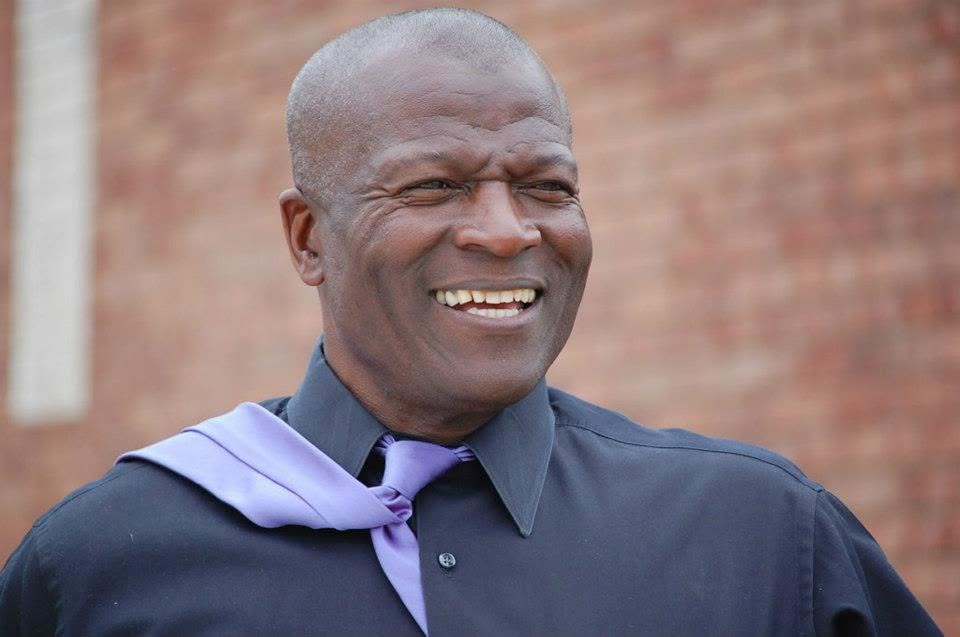
Franklin – now 77 and a minister living in Denton, Texas – laughs when he hears that. He says there were multiple contests and that he “of course” beat Bert more than Bert beat him. Franklin also says “about 86 yards” was his personal best.
Did he ever see Bert throw a football 100 yards?
“No,” Franklin says. “I’ve never seen anybody do that.”
So the story of Bert’s “100-yard throw” is perhaps apocryphal. Or maybe it somehow existed. Either way, the fact that it’s even discussed – even contemplated as potentially real – tells us everything we need to know about the power of The Ruston Rifle.
And there are still believers.
“I’m a believer,” says John Ed Bradley, a top-notch center for LSU from 1976 through 1979 who later became a Sports Illustrated writer and authored the book It Never Rains in Tiger Stadium. “When I was at LSU, that story about Bert throwing 100 yards was circulating. I always thought that it was possible – just because he had such a strong arm. And I believed that he had done it.”
There is really no need for any definitive conclusion. No need for the absence of absolutes to get in the way of a good story still making the rounds.
As Bradley says: “Bert’s legend was huge. And I think he earned that legend.”
Previous stories:
Day 1: The Bert Jones I’ve always known: A personal tribute
Day 2: The real ‘original No. 7’ of LSU football