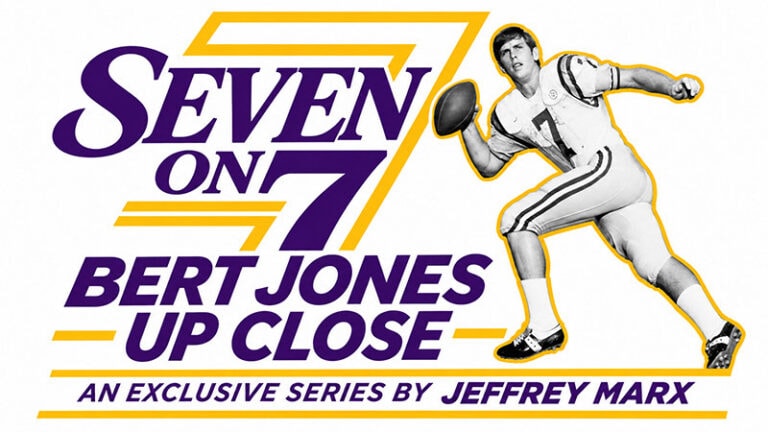
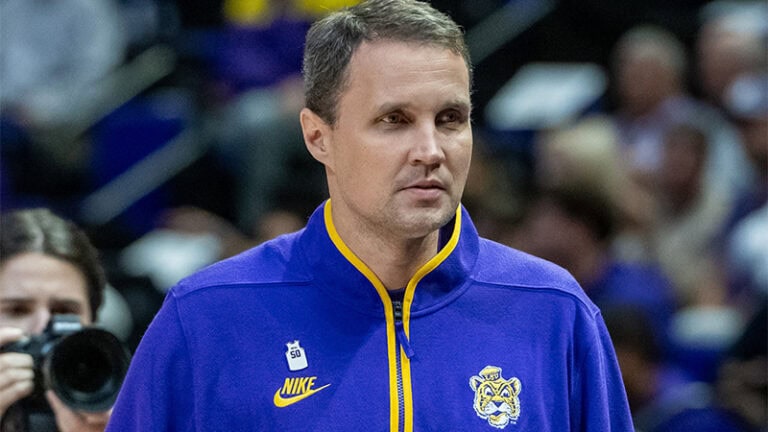
With LSU football retiring the jersey No. 7 of Bert Jones on November 14, 2026, LouisianaSports.net is publishing a series about Jones called 7-on-7 … one story each day for seven days leading up to the jersey retirement ceremony.
The series is written by Pulitzer Prize winner Jeffrey Marx, author of six books including Walking with Tigers: A Collection of LSU Sports Stories.
Tom and Dell Jones knew something was not right with their baby boy. Six-month-old Caleb was sick – seemingly just a minor cold – but the bigger concern was that he’d been losing weight. What healthy infant loses weight over two months instead of gaining it?
Their doctor wanted to start by ruling out some of the worst possibilities. Unfortunately, the first test was the only one needed. Caleb had Cystic Fibrosis.
“It was hard to hear,” Tom says. “The doctor just said he had CF and that it was considered a terminal illness.”
This was in 1986. Median life expectancy for someone with CF was only 26 years. And life would not be easy. There would be breathing struggles … violent coughing … ugly infections … the redundance of unpleasant treatments. And all of it without any reasonable hope of escaping the inevitable.
Dell felt like she was already losing her son.
“We were scared,” she says.
Tom and Dell leaned heavily on their faith in God.
But the science was daunting – the statistics unforgiving.
The outcome would never really be open to discussion. The only real question was a brutal one: How long would little Caleb have in this world?
*******************************
Bert Jones was shocked and saddened by the diagnosis. CF is an inherited genetic disorder that causes thick, sticky mucus to build up in multiple organs, most notably the lungs, creating a barrage of life-threatening conditions. “Devastating” is how Bert now describes first hearing about it from Tom.
Tom is one of his four brothers – the youngest of his six siblings.
Like Bert, Tom had been a quarterback. He played first at Ruston (Louisiana) High School, same as Bert had done before him, and then for the Arkansas Razorbacks. On October 17, 1981, five years before Caleb was diagnosed, Tom was riding the biggest high of his football life, leading his unranked team to a huge upset (42-11) of No. 1 Texas. Now 25 and still living in Arkansas, an assistant project manager for a construction company, he was facing his biggest challenge in life itself.
Caleb was immediately admitted to Arkansas Children’s Hospital in Little Rock. For the moment, top priority was making sure his cold cleared without complications, as even a minor respiratory issue could quickly escalate into something serious for a baby with CF.
That initial hospital stay also offered Tom and Dell a crash course in being “CF parents” with a whole new regimen to follow.
They learned about using a special baby formula – and adding a calorie booster – to help with weight gain. They learned about mixing pancreatic enzymes into apple sauce to assist with digestion.
They learned about the problems mucus caused for a CF patient. They learned how to administer breathing treatments – including the use of a bronchial dilator to help open the airways – and that their son didn’t particularly like having an aerosol mask on his face.
They learned about another procedure that would always be part of their days – from twice to four times daily. “Chest physical therapy” was the term being used. It was a softer way of saying “beating on Caleb’s chest” … and on his side … and on his back … with the “rubber clappers” they were given. That threatening mucus had to be broken up and expelled from the lungs.
Caleb was soon released from the hospital.
A few months later, Tom and Dell moved back to their shared hometown of Ruston. With two small children – one of them needing considerable care – they were eager to wrap themselves in the love and support of their families.
*******************************
Bert wanted to help however he could.
But what could anyone really do?
Nobody could redirect the unyielding course of any single child with CF. Help was needed on a much broader basis. New treatments were needed. A cure was needed. Money was needed for research.
And that was why Bert put his name on a charity golf tournament. Another one of his brothers – Ben Jones – knew a Baton Rouge man named Jim Crane who also had CF in his family. Crane wanted to raise money for the Cystic Fibrosis Foundation. Ben put him in touch with Bert. And they started planning.
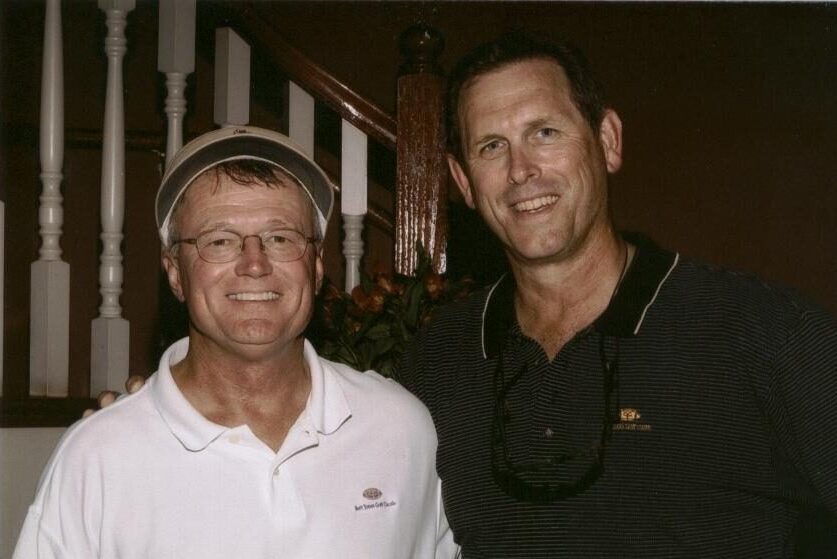
Bert was by then out of football. A neck injury had forced him to retire from the NFL after the 1982 season. But he still understood the power of the sports platform in America. As an All-American at LSU and an All-Pro in the NFL – 1976 league MVP while playing for the Baltimore Colts – Bert was well versed in the good that a high-profile athlete could do by using that platform in positive ways.
In Baltimore, he had played prominent roles in support of United Way and Boy Scouts of America. He had also helped with fundraising efforts to build the first Ronald McDonald House in Maryland. Back home, Bert was then working with former LSU teammate Tommy Casanova and a few other local celebrities as co-founders of the Louisiana Clean Team to discourage littering and protect the environment.
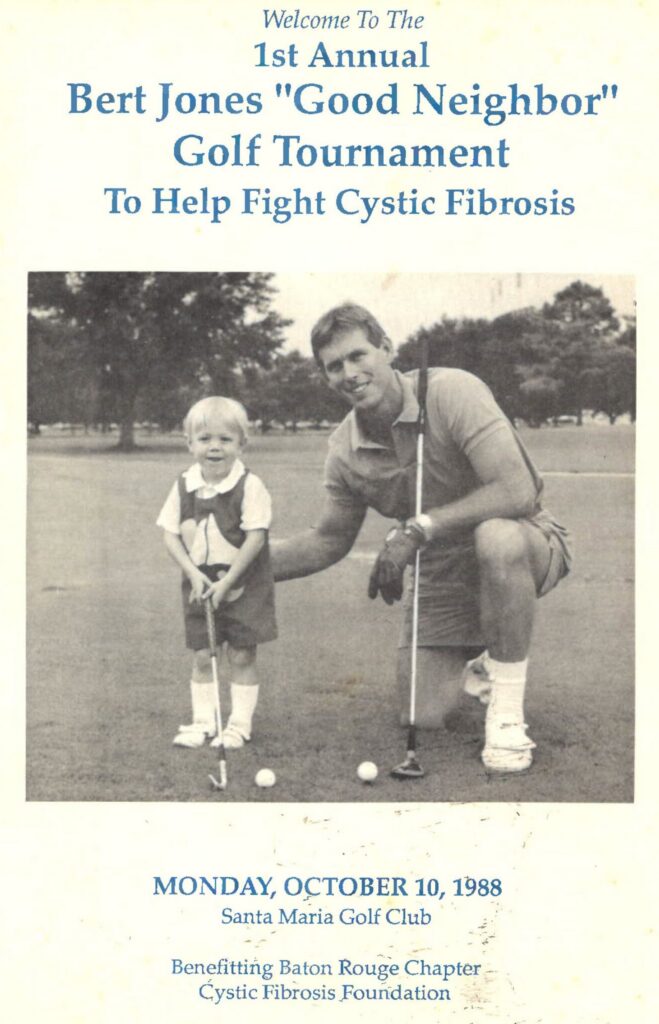
But this was the first time a charity event would carry his name. Bert had a hard-working and dedicated partner right from the start: Crane, father of two children with CF, was a State Farm Insurance agent with a gentle demeanor and a generous collection of contacts. The CF Foundation’s Baton Rouge office was also on board to help.
But only one name would be used as a draw and promoted all over the place. The inaugural Bert Jones “Good Neighbor” Golf Tournament would be held on October 10, 1988, at Santa Maria Golf Club in Baton Rouge.
“Bert just kind of did this on his own,” Tom Jones says. “I don’t recall him telling us what he was planning. He just kind of quietly got involved. You know, he’s always been the take-charge leader type, Type A personality, and that’s always served him well, especially in football. But he’s also so big-hearted, so compassionate.”
It was just Bert being Bert.
*******************************
He had one rule he shared with everyone working on the tournament: “If we’re going to do this, we’re going to do it right.”
He had another rule that went unsaid but not unnoticed: “Part of doing things right is making sure to have fun along the way.” Fun for himself. Fun for everyone who participated. Again, Bert being Bert.
The tournament was a four-man scramble. Scores were kept and prizes were awarded. More than anything, though, the outing was about people with CF and their families. It was about creating hope for a better future.
Everyone learned something about CF. Everyone had a good time.
And Bert decided to do the tournament again the next year. Why not?
Of course, he had no idea that he’d end up doing it 32 years in a row. No idea it would become the CF Foundation’s largest annual fundraiser in Louisiana. No idea his little golf tournament would end up raising more than $2.5 million.
*******************************
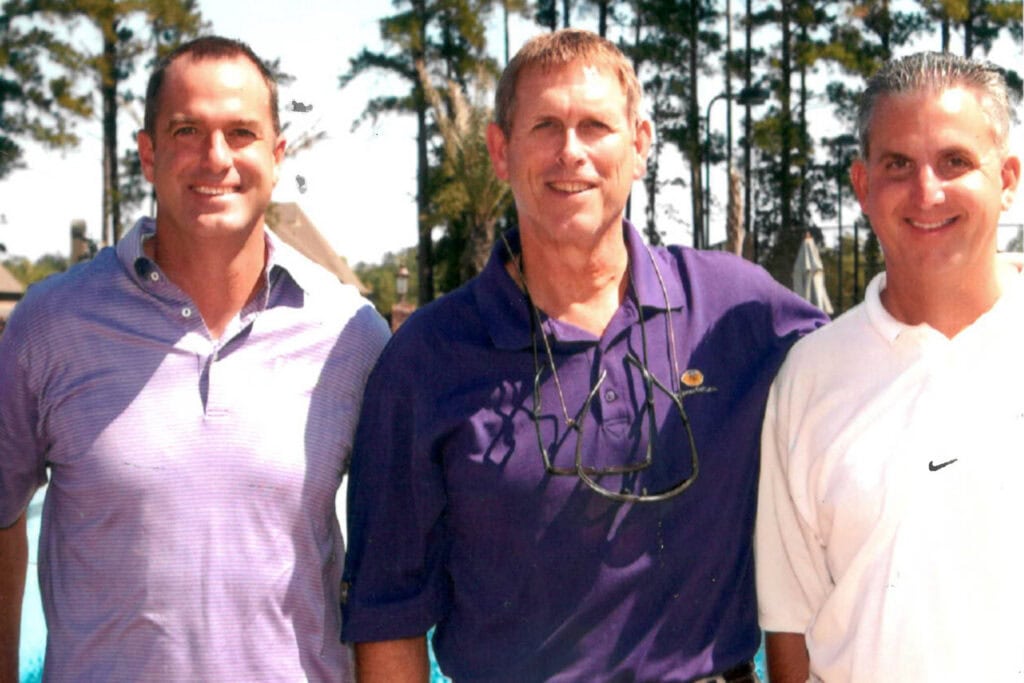
A critical boost for the tournament came in 1994, when one of Crane’s clients, Baton Rouge car dealer Mike Hollingsworth, got on board, bringing along his partners with Hollingsworth Richards Ford. The company became title sponsor of the renamed Bert Jones Golf Classic.
For a number of years, a second event was held the night before the golf: an auction of sports memorabilia conducted during a downtown cocktail reception.
The tournament was not promoted as a celebrity event, but former LSU athletes and New Orleans Saints stars still showed up and added to the enjoyment. Among them: Tommy Hodson, Jimmy Taylor, Dalton Hilliard, Charles Alexander, Lolo Jones, George Bevan, Rickey Jackson, Rohan Davey, and Archie Manning.
Bert was always at the tournament from start to finish. He spent most of his time meeting and greeting participants – thanking them for their support and talking about the importance of the CF Foundation.
But he also played some golf. In the early years, he’d hang around the first tee, challenging everyone to a one-shot driving contest: Who could hit his tee shot longer than Bert’s? Anyone who beat him was awarded a mulligan to be used anywhere on the course.
Sometimes Bert played an entire hole with a group – temporarily transforming four-man scramble into a game for five.
“He could change the rules anytime he wanted to … and did,” Hollingsworth says.
“With Bert, it really wasn’t about the golf,” Hodson says. “He was just trying to make everyone laugh and have a good time.”
Hodson knew that better than anyone because for years he was an up-close witness to Bert’s shenanigans. The two of them – two of the best quarterbacks in LSU history – would share a cart and ride around the course together. The idea was to visit with everyone and take photos with each group.
But Bert could not just leave it at that. He also repeatedly announced himself as “chairman of the rules committee” – loudly and overdramatically announced himself that way – and pretty much anything could happen after that.

As Hodson recalls: “If you need a second drive because you didn’t like the first one, take it. If you need an extra putt, take it. Bert was the chairman. Whatever you thought the rules were, you could put that aside. If Bert was there, whatever shot you need, you could do it, and it was OK.”
This was not exactly high-level championship golf. But that was never the idea.
“It was all in fun,” Bert says. “If I thought you were too serious, I’d try to make you have more fun.”
Fun was indeed had by all. Money was raised. And every bit of it mattered.
*******************************
While Caleb would always be credited as catalyst for the start of the tournament, Bert had plenty of additional inspiration that kept making him want to do more for the CF Foundation.
In 1989, Tom and Dell Jones celebrated the birth of their third child – third boy in a row – and little Aaron was soon tested for CF. He had it.
Next came their first daughter – Sarah – in 1992. She, too, soon tested positive for CF.
The odds were heavily against three children in a row having it. (When parents are both carriers of CF – as Tom and Dell are – there is a 25 percent chance that any one child will have it. So, taken as independent events, the odds of three children in a row having CF are one in sixty-four.)
Odds aside, Bert now had triple the motivation to continue what he was doing.
And there was more.
Because Bert – whose full name is Bertram Hays Jones – came to learn more about the long-gone family member after whom his parents had named him. The first Bertram Hays Jones was sick as a toddler. Had he been healthy, he would have grown up as an older brother of Bert and Tom’s father, Dub.
But Bertram number one died soon after his second birthday in 1921. CF was not identified until 1938. Based on the only information known about the original Bertram, though – that he had always been sick and coughing and ultimately “wasted away” with weight loss – the family now wondered if he had been taken by CF before CF even had a name.
Bert processed the short life of his namesake as another powerful connection to a cause he’d already embraced as his own.
Then there were other CF families he got to meet while working with the foundation. Their fortitude and grace always touched him. Bert kept finding himself drawn deeper into the CF community.
And the final inspiration was the best of all. The research on CF kept yielding advances in treating the dreadful disorder. The lives of people with CF kept getting better. Life expectancy kept increasing.
Hope was on the rise.
*******************************
Meanwhile, Caleb Jones was hit with more bad news. As a high school sophomore, he was diagnosed with CF-related diabetes. In addition to continuing his regular routine of pills and treatments, he had to start wearing an insulin pump with a small catheter stuck in his torso.
It was not pleasant. But Caleb already knew what it meant to be uncomfortable. He had long before learned how to get over hurdles and keep moving forward.
Caleb went to college.
He made it to law school at American University in Washington, D.C.
But his health kept getting worse. Breathing became more difficult. He constantly coughed. He could hardly sleep.
His mind kept returning to thoughts he could only temporarily push away: This is it. This is the long decline I’ve always heard about. There’s nothing you can do anymore. You’re just gonna slowly die.
*******************************
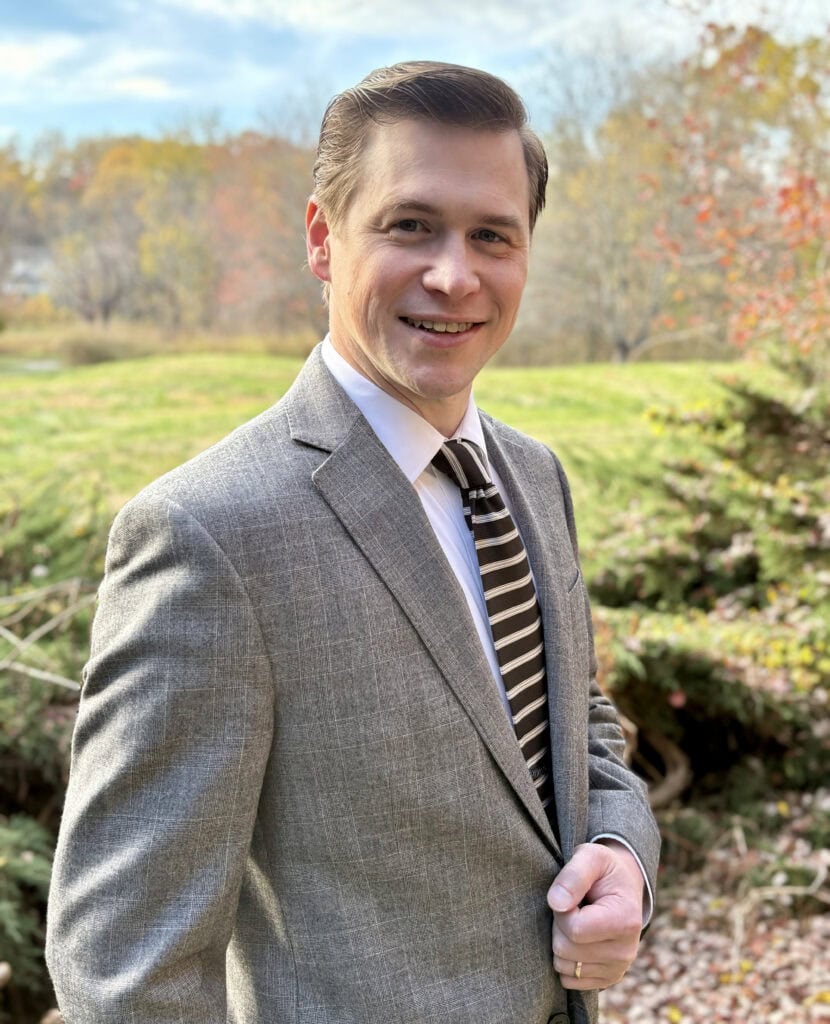
Caleb didn’t die.
He kept battling.
He got his law degree. He passed his bar exam. In 2019, he joined a law firm just outside D.C. in Northern Virginia.
It was a milestone year not only for Caleb. The entire CF community celebrated 2019 because that was when the U.S. Food and Drug Administration approved a pill called Trikafta – by far the most effective therapy yet to help fight against CF. About 90 percent of people with CF have dramatically improved their health by taking Trikafta.
Caleb was first able to get it in early 2020. And Trikafta changed everything for him.
The turnaround in his health started almost immediately – within hours of taking his first dose.
“You can only describe it as miraculous … just a light in the dark,” Caleb says. “I mean, I just stopped coughing. I’d been coughing every single day for like ten years … violently coughing to the point I didn’t even know if I’d be able to keep a job.”
Trikafta also greatly improved the lives of his brother Aaron and sister Sarah.
Caleb is now 40 years old and married. That life expectancy of 26 years when he was first diagnosed with CF? The CF Foundation says the median life expectancy is now up to 66 years.
Caleb will not put any limits on himself.
“I just want to be a normal guy,” he says. “I have strong opinions. I like to write. I love astronomy and history. I like to read books – especially old books. I want to be good at my job. I want to love my wife. I just want to do normal, regular things.”
*******************************
By coincidence alone, 2019 was also the last edition of the Bert Jones Golf Classic. This had nothing to do with all the improvements in treatment for CF patients. There is still an abundance of work to be done. Treatments can still be improved. And everyone still wants to find an actual cure for CF.
But the 2020 golf tournament had to be cancelled because of the COVID-19 pandemic. After 32 years of hitting the links for a cause – 32 years of meeting and greeting and always inducing smiles as self-appointed chairman of the rules committee – Bert figured it was time to let go of his creation.
“We had a good run,” he says. “And thank goodness for the Cystic Fibrosis Foundation. Thank goodness for Jim Crane. Thank goodness for my brother Tom allowing a tournament to be held. Thank goodness for the Baton Rouge community always supporting it so well. Thank goodness for all the research that has been done and for all the wonderful doctors across the world. Amen.”
Previous stories:
Day 1: The Bert Jones I’ve always known: A personal tribute
Day 2: The real ‘original No. 7’ of LSU football
Day 3: The Ruston Rifle
Day 4: Football, family, and fun: A game weekend for the ages
Day 5: Bert Jones and Archie Manning: Always in friendship